
Traditional conservatives must incorporate the populists’ genuine concern for working-class Americans before it is too late
Joe Biden is already positioned to be the most liberal president in America’s history, if he were elected, and yet is still moving further to the left after winning the primary. Yet, the more interesting changes are actually happening within the Republican Party, as conservative populists are attempting to reshape the party away from traditional corporate-friendly economic policies.
Traditional economic conservatism has long been grounded in the secular trinity of free markets, less regulation and lower taxes. Whereas Republicans have historically embraced free trade and legal immigration as a natural expression of these principles, Donald Trump famously upended both these positions on his way to winning the Republican nomination.
In contrast with Sen. Marco Rubio, R-Fla., who championed a comprehensive immigration compromise, Trump explicitly called for limiting legal and illegal immigration to drive up wages for lower-skilled American workers and job opportunities for high-tech and other skilled workers…
Read more: Fox News
The coronavirus pandemic is changing everything. Liberal partisans confidently predict the pandemic conveniently confirms their long-held beliefs about the need for a larger and stronger central government, with less discretion for local and state governments, much less private actors. They decry Trump for not setting one-size-fits-all federal policies on testing and reopening and belittle the ability of everyday people to make risk-benefit decisions for themselves. The Left argues the so-called self-evident need for a single-payer health system to test and treat millions who might otherwise infect others, especially as record-high unemployment rates threaten employer-provided health insurance. Though COVID-19 will certainly have long-lasting impacts, liberal pundits should temper their predictions with a dose of reality…
Read more: WashingtonExaminer.com
The U.S. government has spent trillions of dollars attempting to mitigate the fallout from the coronavirus pandemic, but concerns overspending are starting to mount, along with the national debt.
The nation’s debt now stands at $25 trillion as spending concerns have naturally taken a back seat to the recovery effort. As most of the country begins a slow return to normalcy, some Republicans, including Texas Sen. Ted Cruz have begun to sound the alarm on Congress’ spending sprees. On the other hand, some Republicans are reportedly urging their leadership to pursue what Senate Majority Leader Mitch McConnell has deemed a “blue state bailout.”
…
Read more: Daily Caller
A comparative look at population growth and spending over 10 years.
Democrats want a $915 billion budget bailout for states and cities, and the leading lobbyist is New York Governor Andrew Cuomo. His main public antagonist on the subject is Florida Senator and former Governor Rick Scott. Both men were first elected Governor in 2010, so let’s do the math to consider which state has managed its economy and finances better over the last decade.
In 2010 New York’s population of 19.378 million was larger than Florida’s 18.8 million. By mid-2019 Florida had grown to 21.48 million, according to the Census Bureau, while New York had barely increased to 19.453 million. Yet Mr. Cuomo recently signed a budget for fiscal 2021 of $177 billion that is even bigger than last year’s, papering over what was a $6 billion deficit before the coronavirus. Florida’s budget for fiscal 2021, not yet signed by new Governor Ron DeSantis, is expected to be about $93 billion.
Democrats in Albany are claiming to be victims of events that are out of their control. But they have increased spending by $43 billion since 2010—about $570,000 for each additional person. Florida’s budget has increased by $28 billion while its population has grown 2.7 million—a $10,400 increase per new resident.
…
Read more: WSJ.com
The Cuomo–Scott cage match replicates the American debate in miniature.
With the debate over additional epidemic aid to the states simmering, Florida senator Rick Scott and New York governor Andrew Cuomo are taking a special interest in one another.
Senator Scott used to be Governor Scott. He took office in Florida in 2011, three days after Cuomo did in New York. The two states had a lot in common at the time: Both had been hammered by the financial crisis, both had lost a lot of jobs during that crisis, and—this part is sometimes forgotten—both had seen significant numbers of residents moving elsewhere.
After having led the country in net domestic migration (meaning people moving from one part of the United States to another) for years, Florida had slipped behind Texas in 2006—and by 2008, it was losing population to other states. Both New York and Florida began to make modest population recoveries in 2010, but New York’s petered out. Between 2010 and 2019, its net domestic migration decline was almost 1.4 million people. Florida has kept growing. It surpassed New York as the third-most-populous state in 2014. New York is probably going to lose a House seat after the next census; it already is losing part of its tax base to Florida, as even Governor Cuomo has been forced to admit.
How bad is it? New York officials currently are scrutinizing dentists’ records and veterinarians’ bills to make sure that former New Yorkers who have relocated to Florida aren’t exceeding their quota of New York days. “If you’re a high earner in New York and you move to Florida, your chances of a residency audit are 100 percent,” Barry Horowitz of WithumSmith+Brown, an accounting firm, told CNBC.
Who wouldn’t want to sign up for that?
…
Read more: National Review
Joe Biden has been mocked for touting his ability to work with Republicans, and for his optimism that he’ll do the same if elected president. There are good reasons to mock Mr. Biden, but this isn’t one of them. Politicians should be encouraged to respect their opponents. Voters tell pollsters they want elected leaders to put aside differences and work together for the good of the country, and politicians promise to do so. Mr. Biden seems to believe he can.
The former vice president’s emphasis on bipartisanship and collegiality is out of sync with the nation’s political mood, which is ironic given the rise in partisan rancor during the Obama-Biden years. President Obama was often wrong but never in doubt. He enjoyed destroying straw men to demonstrate his moral and intellectual superiority. He pursued sweeping legislation like the Affordable Care Act on a partisan basis, and thus gave rise to the tea party, Republican congressional majorities, and the spiraling partisanship that resulted in the election of leaders like President Trump and Rep. Alexandria Ocasio-Cortez. …
Read more: WSJ.com
The Democrats have turned religious. Not in the sense that they espouse a belief in an omnipotent and benevolent Creator or eternal and universal moral principles. They are religious in the sense that they hold dogmatic beliefs that are impervious to contradiction by logic, evidence or experience, and cultivate a moral superiority toward unbelievers. The party that loudly prides itself on tolerance and diversity is increasingly intolerant in at least three areas.
First, Democrats have moved beyond traditional environmentalism, with its emphasis on regulation, technological innovation and market incentives to achieve incremental progress, toward a radical vision grounded in an unshakable belief in climate apocalypse. Both parties once cooperated to protect endangered species and clean the air, water and soil. Today’s Democrats demand bans on fracking and new oil and gas leases on federal lands, and endorse the elimination of all fossil fuels and decarbonization of the economy in unrealistic time frames. Rather than aspirational moonshots, intended to inspire the public and private sectors to work together, Democrats use these impossible goals as rationales for completely restructuring how Americans live, work, commute and even eat. …
Read more: WSJ.com
Democratic presidential candidates are repeating one of President Obama’s worst mistakes, one that arguably cost Democrats the 2010 midterms. Rather than focusing on bringing down medical costs—which are ever on the rise—Democrats are pushing policies that primarily aim to expand coverage and shift costs to taxpayers.
As Mr. Obama did, the Democratic hopefuls pushing massive health-care overhauls pay lip service to cutting costs, but there isn’t compelling evidence that their plans will do so. It’s now evident that the Affordable Care Act did nothing to bend the price curve down, as Mr. Obama promised it would. One look at the math underlying Sen. Elizabeth Warren’s Medicare for All scheme should dispel any illusions that the new plans will be any better.
Most Americans like their health insurance as it is. Their complaints revolve around high out-of-pocket drug prices, deductibles and hospital bills. Insurers are increasing cost-sharing across health-care plans in an effort to curtail premium prices and tamp down overuse. Even a good policy won’t give you much relief from high deductibles and other out-of-pocket costs. …
Read more: WSJ.com
Populist patriots reject the elites of both parties. They believe President Trump defends their cultural beliefs from the left and their economic interests from the right. They see open borders, illegal immigration and multiculturalism threatening to redefine what it means to be an American, while unfair trade and a rigged tax code endanger their jobs.
The rejection runs both ways. Elite liberals too often talk about patriotism as if it’s a set of blinders preventing Americans from recognizing their country’s flaws. Likewise, conservative elites can be too concerned with boosting gross domestic product, dismissing patriotism as a trifle to be set aside when there are higher investment returns to chase or markets to open.
Read more: WSJ.com
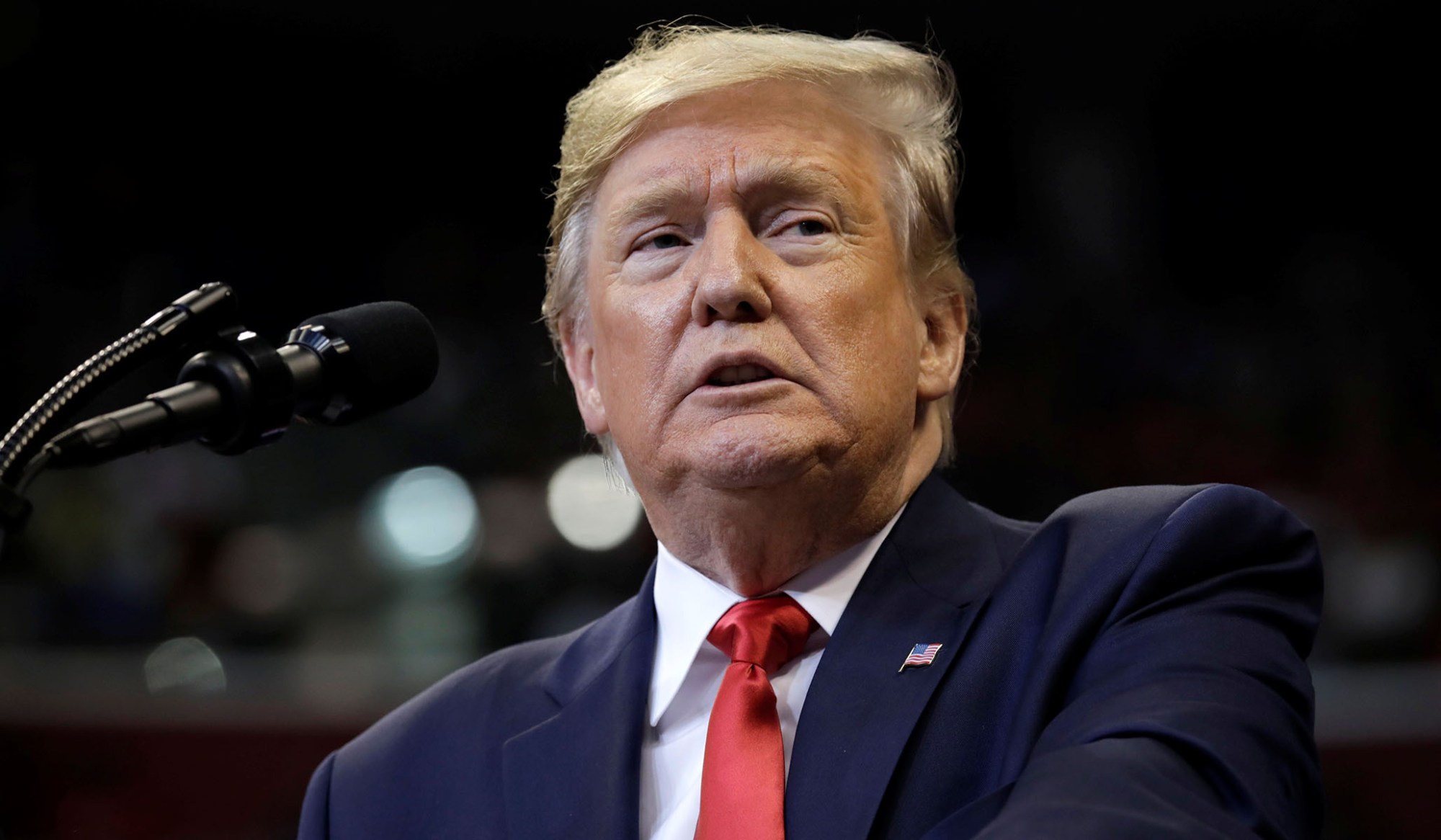
The angry Left is irrational, the president thrives amid drama, and the media can’t turn away. Buckle up.
Trump has an amazing ability to excite both his supporters and his critics; rare is the individual who has not taken a side. His strongest partisans think that Trump can do no wrong, and they show a remarkable ability to shift their previous ideological commitments in order to accommodate the president’s latest policy positions. The same Republicans who saw Obama’s deficits as existential threats and chafed at his premature withdrawal of troops from Iraq have kept their silence in the face of rising debt and Trump’s withdrawal from Syria.
Trump’s critics show the same consistency in opposing Trump, even when it means they must abandon their previous positions. The same Democrats who publicly opposed Obama’s dispatch of troops to Syria now refuse to authorize their continued presence or approve Trump’s withdrawal. Many Democrats resist giving Trump credit for embracing the criminal-justice reforms they have long championed — and for doing more than Obama ever tried.
Read more: NationalReview.com